
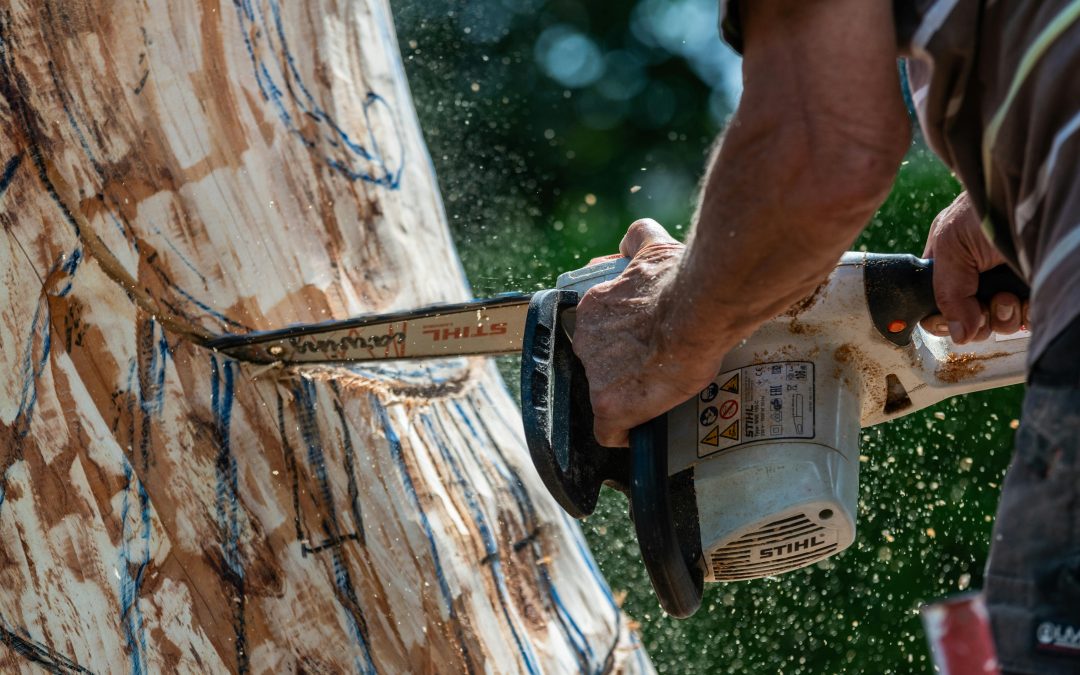
Cutting down a tree might sound simple — until there are power lines involved. If you’ve got a tree growing too close to electrical wires, it’s not just a landscaping issue. It’s a serious safety hazard.
In this post, we’ll explain why tree felling near power lines should never be a DIY job, the risks involved, and what steps you can take to protect your property, your family, and your community.
Why Tree Felling Near Power Lines Is So Dangerous
Trees and power lines are a risky mix. Even if a branch just brushes a live wire, it can cause electrical arcing, outages, or even fires. And when you’re cutting or trimming, one wrong move could bring the entire tree into contact with high-voltage lines.
Here’s why this job is best left to professionals:
- Electrocution risk: Electricity can travel through the tree, tools, or your body — even without direct contact.
- Power outages: One slip can knock out power for your entire neighborhood.
- Property damage: Trees can fall unpredictably, damaging your roof, fence, or vehicles.
- Legal liability: In many areas, working near utility lines without proper certification is illegal.
According to the Occupational Safety and Health Administration (OSHA), contact with power lines is one of the top causes of fatal tree care accidents in the U.S.
How to Know If Your Tree Is Too Close to Power Lines
You don’t need to get out a measuring tape to know there’s a problem. If you notice any of the following, it’s time to call a professional:
- Branches are touching or hanging over power lines
- The tree leans toward the wires or has heavy limbs above them
- You see sparks or hear buzzing sounds during windy weather
- Utility crews have flagged your property in the past
Even if the tree looks healthy, its location can make it unsafe. Over time, branches grow outward and upward — especially after heavy rains or storms.
Who Handles Tree Felling Near Power Lines?
Not all tree companies are qualified for this type of work. At Gonzalez Landscaping & Tree Care, for example, we use licensed tree care professionals trained in electrical hazard awareness. We also coordinate with your local utility company when necessary.
In many cities and counties, utility providers are responsible for trimming or removing trees that directly interfere with high-voltage lines — but only in specific zones. For trees within private property lines, the responsibility usually falls on the homeowner.
That’s why it’s important to work with a team that understands the local laws, safety standards, and permit requirements.
What the Professional Tree Felling Process Looks Like
Here’s a general overview of what happens when you hire a certified tree removal expert for a tree near power lines:
- Initial inspection – The tree’s condition, angle, size, and proximity to wires are carefully evaluated.
- Planning and prep – The team sets up rigging systems or cranes if needed, and creates a step-by-step removal plan.
- Communication with utilities – If required, the power company may temporarily shut off electricity to nearby lines.
- Controlled removal – The tree is removed in small sections, starting from the top. Safety equipment is used throughout.
- Debris cleanup – All branches and trunks are hauled away, and the area is left clean and safe.
This isn’t a job for ladders and chainsaws alone — it requires training, teamwork, and the right equipment.
Can You Trim Trees Near Power Lines Yourself?
If your tree is within 10 feet of a power line, don’t try to trim or remove it yourself. Even if the branch looks harmless, you can’t always tell if the wire is live — and the voltage can be lethal.
Instead, follow these steps:
- Keep kids and pets away from the area
- Don’t climb the tree or lean ladders against nearby structures
- Call your utility company or a certified tree care service
- Never attempt to cut trees during or after a storm
Safety comes first — and the risks are too great to take chances.
What About Trees Growing Near Service Drops?
A service drop is the line that connects your house to the main power lines. While it carries lower voltage, it’s still dangerous. Many utility companies won’t maintain these lines, so if your tree is growing near them, you’re responsible — and you should still hire a pro.
Final Thought
Tree felling near power lines is not just a tricky job — it’s one of the most dangerous tasks in tree care. Whether you’re concerned about an overgrown oak or a storm-damaged pine leaning toward your wires, don’t take unnecessary risks.
Call a licensed, insured, and experienced tree care team who understands how to do it safely.
At Gonzalez Landscaping & Tree Care, we have the expertise and equipment to handle hazardous removals the right way. If you’re unsure about a tree on your property, reach out for an inspection. Your safety is worth it.