
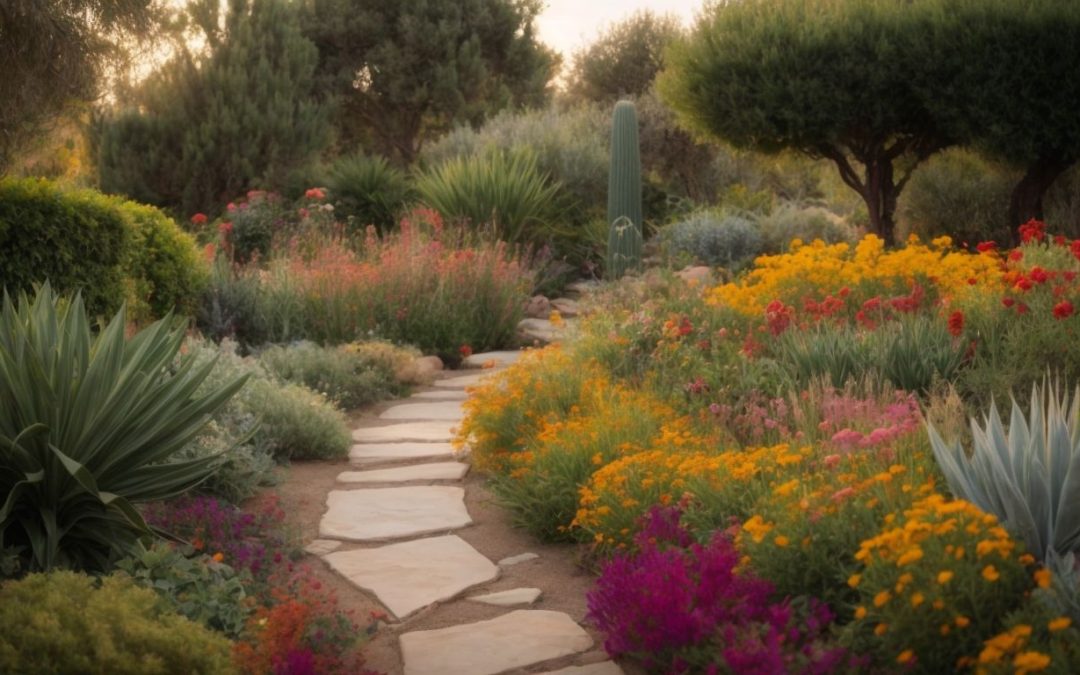
Xeriscaping is a landscaping method designed to reduce water usage while creating a beautiful, sustainable garden. This approach is particularly beneficial in areas prone to drought or with limited water resources. Here are key principles and tips for implementing xeriscaping in your yard:
1. Planning and Design
Begin with a well-thought-out design that takes into account the natural landscape, soil type, and climate. Group plants with similar water needs together and position them in areas that match their sun and shade requirements. This strategic planning will ensure efficient water usage and plant health.
2. Soil Improvement
Improve soil quality by incorporating organic matter such as compost. This enhances soil structure, increases its water-holding capacity, and promotes healthy root growth. Well-prepared soil reduces the need for frequent watering.
3. Efficient Irrigation
Install efficient irrigation systems like drip irrigation or soaker hoses. These systems deliver water directly to the roots, minimizing evaporation and runoff. Consider using a smart irrigation controller to adjust watering schedules based on weather conditions.
4. Mulching
Apply a thick layer of mulch around plants to retain soil moisture, suppress weeds, and regulate soil temperature. Organic mulches, such as wood chips or bark, decompose over time, adding nutrients to the soil.
5. Drought-Tolerant Plants
Select plants that are adapted to your region’s climate and require minimal water once established. Native plants, succulents, and drought-tolerant perennials are excellent choices for xeriscaping. These plants are resilient and can thrive with less water.
6. Reduce Lawn Areas
Lawns require significant water and maintenance. Consider reducing the size of your lawn or replacing it with low-water ground covers, ornamental grasses, or hardscaping elements like gravel or pavers.
7. Regular Maintenance
Maintain your xeriscape garden by regularly checking irrigation systems, replenishing mulch, and pruning plants to encourage healthy growth. Removing weeds and dead plants will also help conserve water and keep your garden looking its best.
By adopting xeriscaping principles, you can create a water-efficient, low-maintenance landscape that is both beautiful and environmentally friendly.